Plastic in Offices and Clinics
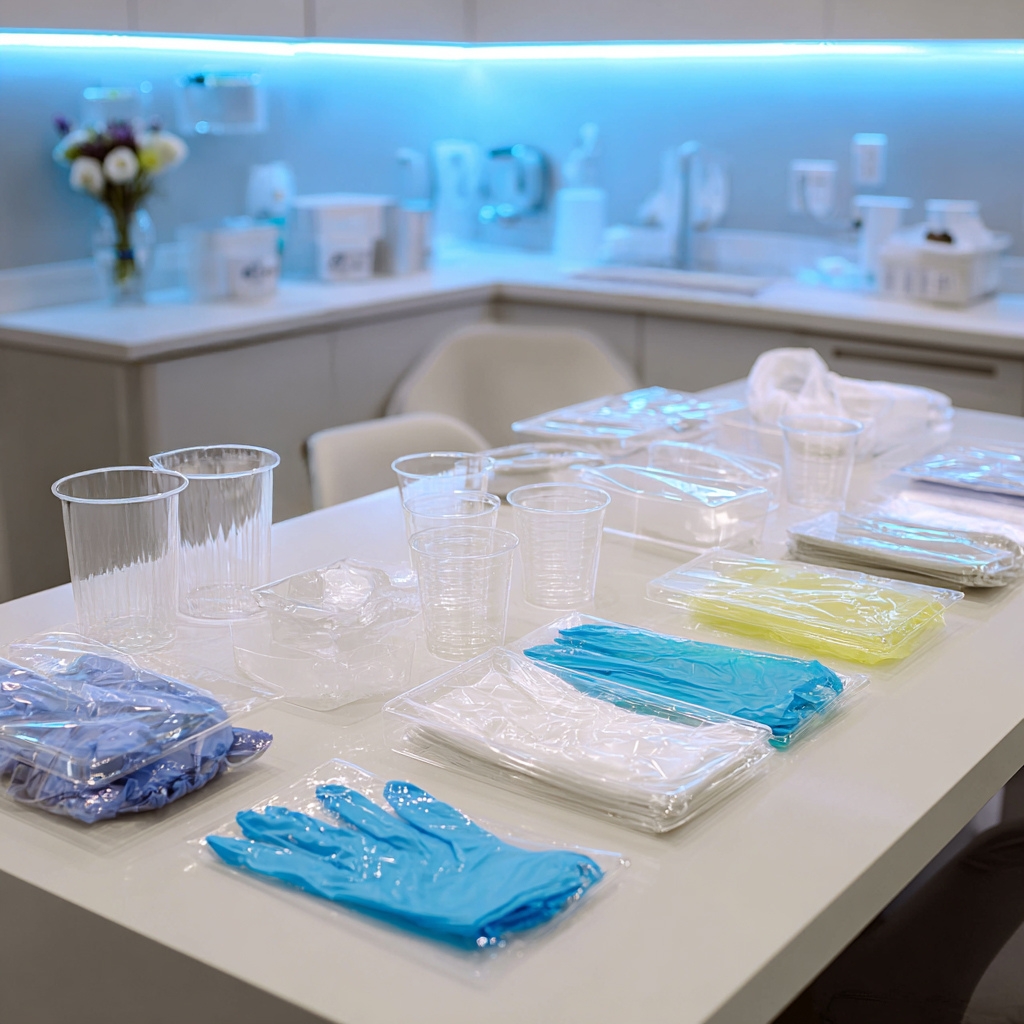
For decades, plastic has been an inseparable part of the cosmetic, hairdressing, and medical industries. Gloves, containers, disposable accessories, and protective packaging are all made from it. Its lightness and durability were once considered its greatest advantages, but today they have become one of the biggest burdens for the environment. Plastic waste from clinics is growing at an alarming rate and requires increasingly costly disposal. That is why there is a growing discussion about the need to replace it with new materials that ensure hygiene and safety without long-term consequences for the planet.
Bioplastics from Corn and Sugarcane
One of the first solutions is bioplastics made from corn starch, sugarcane, or potatoes. They can be used to produce mouthwash cups, cosmetic packaging, or sample containers in clinics. Their main advantage is that they decompose faster than traditional plastic, reducing the amount of waste. However, they require specific composting conditions and cannot always be processed in traditional recycling systems. Nevertheless, more and more manufacturers are choosing to introduce them into clinics, treating them as a real investment in ecology.
Plastics from Algae and Seaweed
An interesting direction is materials made from algae and seaweed. This raw material does not compete with food crops and renews itself extremely quickly. Algae can be used to create biodegradable films, casings, and lightweight packaging that successfully replace plastic in everyday use. After disposal, they decompose under natural conditions, leaving no waste behind. Imagine a hairdressing cape or disposable gloves made from a material that disappears in compost—this was once a futuristic vision, but today it is a real research direction.
Mycelium as an Alternative
Recent years have also brought the discovery of mycelium as a material of the future. It grows naturally, yet it can be shaped into various forms. Mycelium is already being used to produce protective packaging for transporting medical equipment, and in the future, it could also be used for disposable clinic accessories. Its advantage lies in full biodegradability and the absence of chemical additives. Companies are already experimenting with its applications, seeing it as a chance to replace styrofoam or plastic in offices and clinics.
Recycling and the Return of Classics
Not all solutions rely on inventing new materials. Plastic recycling has reached a new level—thanks to modern technologies, it can be broken down into particles and reused to create new gloves, containers, or bottles for disinfectants. At the same time, glass and metal are regaining popularity, as they are almost infinitely recyclable. Glass bottles and metal containers can be used multiple times, reducing waste and generating savings. Sometimes, the answer to the plastic crisis is therefore a return to proven, traditional solutions.
Responsible Choice
New materials alone will not solve the problem if they are not followed by conscious choices. It is up to the owners of clinics and offices to decide whether to opt for bioplastics, glass, or materials made from agricultural waste. Responsible action is not only a matter of ecology but also a competitive advantage—clients are increasingly paying attention to whether the places they visit operate with care for the environment. In the coming years, it is these conscious choices that will become the key to building trust and a positive image.